The funeral profession is built on trust.
Families place their loved ones into the care of funeral directors believing they will be treated with dignity, respect, and compassion at every stage of the journey. That trust extends not only to the deceased themselves, but also to the personal possessions and treasured items that often accompany them into burial or cremation.
It is therefore difficult to imagine a greater betrayal than the recent case involving the theft of a priest’s ring from his body before burial.
A Disturbing Breach of Trust
Father Peter Crowther had worn his 18-carat gold priesthood ring for more than 50 years. Given to him by his parents when he was ordained in Rome in 1971, the ring carried immense personal and spiritual significance.
Inscribed in Latin with the words “Tu Es Sacerdos In Aeternum” (“You are a priest forever”), it was more than simply a piece of jewellery. It represented a lifetime of service, faith, and devotion.
Most importantly, Father Crowther had expressed a clear wish to be buried wearing the ring.
Yet while handling his body, a funeral home worker removed the ring and later sold it to a pawnbroker.
The financial value of the theft is almost irrelevant. The true damage lies in the violation of a dying wish and the erosion of public confidence in the professionals entrusted with caring for the deceased.
Could It Have Been Prevented?
The uncomfortable answer is yes.
While no organisation can completely eliminate the risk of dishonest behaviour, modern security and accountability systems can make such incidents significantly more difficult to commit and far easier to detect.
Many funeral homes still rely heavily on trust-based processes:
- Manual key registers
- Paper records
- Shared access arrangements
- Limited auditing
- Unmonitored access to mortuary facilities
- CCTV systems that record events but provide little accountability
These measures may have been sufficient decades ago, but families, regulators, and the public increasingly expect greater levels of transparency and protection.
How Securest Could Have Helped
The Securest Mortuary Security System was designed specifically to address exactly these types of risks.
Rather than simply controlling who enters a room, it creates a complete chain of accountability around every interaction with the deceased.
Biometric Access Control
Traditional keys and PIN codes can be lost, shared, borrowed, or misused.
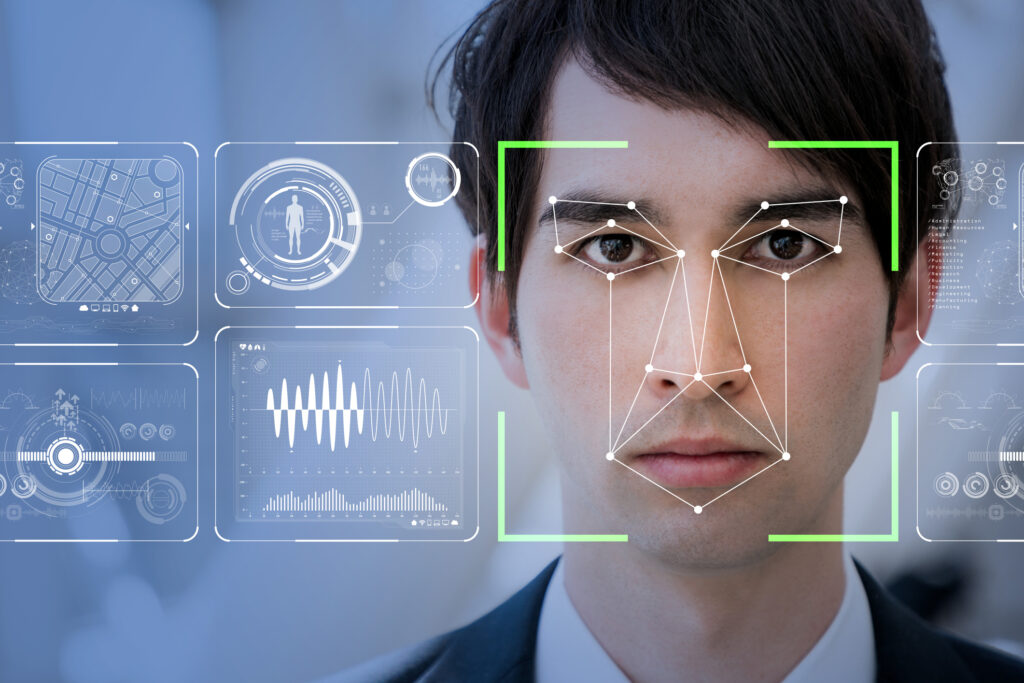
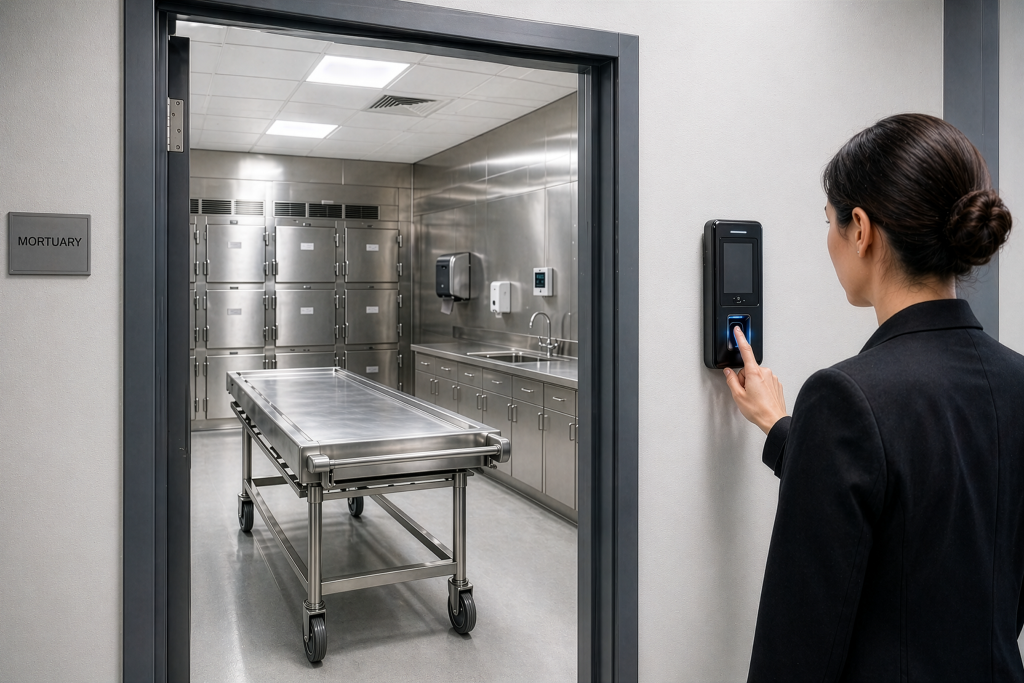
Securest uses biometric authentication, ensuring that every entry into a mortuary, chapel of rest, preparation room, or restricted facility is tied to a specific individual.
There is no uncertainty over who entered an area, when they entered, or how long they remained there.
Every access event is permanently logged.
In a case such as Father Crowther’s, investigators would not need to speculate who had access to the deceased. The system would provide a clear record of every authorised person who entered the area.
Complete Audit Trails
One of the most powerful deterrents against misconduct is accountability.
Securest creates a detailed audit trail showing:
- Who accessed a secure area
- The date and time of access
- Entry and exit records
- Associated security events
- CCTV activity linked to access events
This means managers can quickly establish exactly who was present at any point during the care of the deceased.
Video Verification
Access records tell part of the story.
Video verification tells the rest.
When integrated with CCTV, Securest can link access events to recorded footage, allowing managers to review precisely what occurred during a particular visit.
If concerns are raised about missing property, handling procedures, or unauthorised activity, footage can be located quickly rather than searching through hours of recordings.
Deterrence Through Visibility
Security is not only about catching wrongdoing.
It is about preventing it.
When employees know that access is biometrically controlled, every movement is logged, and CCTV can be linked directly to access records, the opportunity for theft or misconduct is dramatically reduced.
Most incidents occur when individuals believe there is little chance of detection.
A robust security system changes that equation entirely.
Protecting Honest Staff
An often-overlooked benefit of accountability systems is that they protect the vast majority of funeral professionals who do the right thing every day.
If an allegation is made, management can establish facts quickly and objectively.
Rather than relying on suspicion or assumptions, evidence is available to demonstrate exactly what occurred.
Lessons for the Funeral Profession
Cases like this are deeply upsetting because they represent the actions of an individual rather than the standards of an entire profession.
The overwhelming majority of funeral directors provide exceptional care and professionalism.
However, the profession must recognise that public confidence depends not only on trust but also on demonstrable safeguards.
The inquiries and investigations that have followed high-profile cases such as David Fuller and other incidents involving the mistreatment of the deceased have shown that robust governance, accountability, and security are no longer optional.
They are becoming essential.
Trust Must Be Protected
Every family deserves absolute confidence that their loved one will be treated with dignity and respect.
Every funeral director deserves systems that protect their reputation and support the professionalism of their staff.
And every deceased person deserves the assurance that their final wishes will be honoured.
The theft of Father Peter Crowther’s ring is a tragic reminder that trust, once broken, can have far-reaching consequences.
By implementing biometric access control, comprehensive audit trails, and integrated video accountability, funeral homes can help ensure that such incidents become far less likely in the future.
Because when caring for the deceased, trust should never depend solely on good intentions. It should be supported by systems that ensure dignity, accountability, and transparency at every stage of care.
About Securest
Securest provides specialist mortuary and funeral home security solutions, combining biometric access control, intelligent CCTV, audit trails, and accountability reporting to help funeral directors, mortuaries, hospitals, and crematoria protect the deceased, reassure families, and demonstrate the highest standards of care and governance.
Case reference: Lancashire Constabulary, 16 October 2026.